
Who We Are
EIRENE-AT (Exposome Austria) is Austria’s national exposomics research infrastructure and part of the pan-European ESFRI Research Infrastructure EIRENE.
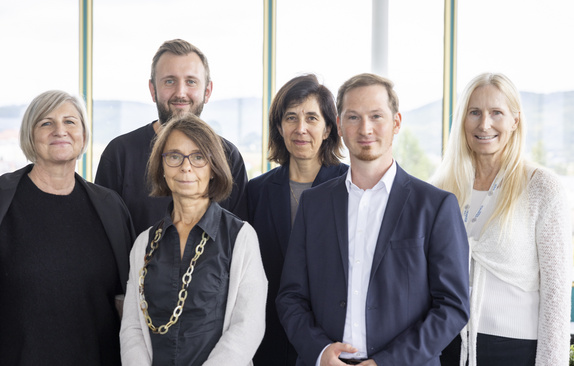
Coordinated by the University of Vienna, EIRENE-AT brings together leading Austrian institutions in analytical chemistry, epidemiology, systems biology, and environmental health to advance exposome science and prevention-oriented research.



Origins
EIRENE-AT (Exposome Austria), the Austrian National Node of EIRENE, was established at the University of Vienna in 2022 in collaboration with national partners.
Its origins trace back to 2019 and build on the Austrian Human Biomonitoring Platform, active since 2007 and embedded in national policy advisory structures.
An Open Lab infrastructure was founded at the University of Vienna in close cooperation with existing mass spectrometry facilities.
Today, EIRENE-AT provides harmonised analytical services for human and environmental samples, supporting national and European research through advanced exposomics workflows.
Download the Human Biomonitoring Report from 2024 (PDF, 2.5 MB)


Our Vision
Find out what makes us sick — enable exposome measurement
The overarching vision of exposome research, simply put, is to understand what makes people (and animals) sick.
EIRENE-AT contributes to this vision by advancing the measurement of non-genetic factors — the human exposome — as key and modifiable drivers of chronic disease.
Through its infrastructure, expertise and collaboration within the EIRENE network, EIRENE-AT strengthens exposome research in Austria.
This supports precision medicine, disease prevention and improved public health.

Our Mission
Find out what makes us sick — enable measurement — build infrastructure
EIRENE-AT aims to become Austria’s leading centre of excellence and first point of contact for human exposome research.
Together with the European EIRENE network, it provides sustainable open access to state-of-the-art infrastructure.
It coordinates and harmonises analytical technologies and supports research teams, public institutions and industry partners.
Advancing exposome research and understanding the drivers of chronic disease.

Strategic Role & Values
A national access point with European impact
EIRENE-AT is hosted by the University of Vienna and supported by a national consortium of leading institutions: Medical University of Vienna, Medical University of Innsbruck, and Environment Agency Austria
It serves as Austria’s central access point to exposome research infrastructure, connecting laboratories, cohorts, environmental data and computational platforms into a coordinated service ecosystem.
Our approach
→ scientific excellence and innovation
→ open access and harmonisation
→ responsible data management
→ collaboration across disciplines and borders
→ commitment to preventive health
Positioning
EIRENE-AT is supported at institutional and national level and contributes to Europe’s next-generation environmental health infrastructure.
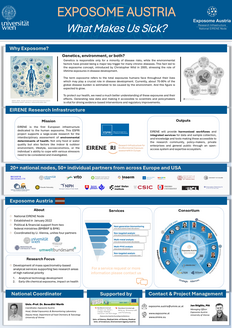
View Exposome Austria Poster, November 2024 (PDF, 2.06 MB)
Meet the Consortium

-
Benedikt Warth (coordinator)
University of Vienna – Global Exposomics & Biomonitoring
Prof. Warth investigates how food- and environment-derived chemicals shape human health using high-resolution mass spectrometry and systems exposomics. He leads development of harmonised workflows linking chemical mixtures to biological effects for improved risk assessment and prevention.
-
Gunda Köllensperger (deputy)
University of Vienna – Mass Spectrometry Centre
Prof. Köllensperger, a Vice-Dean at the Faculty of Chemistry, develops advanced MS-based methods for metabolomics and metallomics, focusing on quantitative workflows for small molecules, trace elements, and metalloproteins across biological and environmental systems.
-
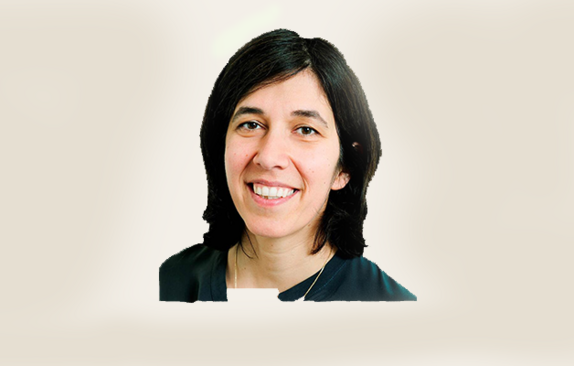
Eva Schernhammer
Medical University of Vienna – Epidemiology & Public Health
Prof. Schernhammer studies how circadian disruption and environmental exposures influence chronic disease risk, using large population cohorts and biomarker approaches with a strong focus on cancer prevention. She works in the Nurses' Health Study group, studying the impact of night shift work on human health and longevity.

-
Claudia Gundacker
Medical University of Vienna – Medical Genetics
Prof. Gundacker leads placenta-centered early-life exposome research combining human biomonitoring and in-vitro toxicology to study prenatal metal and PFAS exposure and adverse birth outcomes.

-
Lukas Wisgrill
Medical University of Vienna – Neonatal & Pediatric Systems Immunology
Prof. Wisgrill focuses on early-life immunity and host–microbiome interactions in newborns, integrating omics technologies with clinically anchored neonatal research to identify actionable health targets.
-
Maria Uhl
Environment Agency Austria – Human Biomonitoring
Dr. Uhl coordinates Austrian human biomonitoring activities and policy-relevant exposure assessment, with particular expertise in PFAS and persistent chemicals at the science–policy interface.

-
Herbert Oberacher
Medical University of Innsbruck – Analytical & Forensic Mass Spectrometry
Prof. Oberacher develops sensitive mass spectrometry methods for the identification and quantification of small molecules, supporting metabolomics and exposure analysis across biological and environmental matrices.

Governance
The Austrian EIRENE national node is coordinated by the University of Vienna in collaboration with national consortium partners and operates within a governance framework aligned with European ESFRI standards and the EIRENE research infrastructure.
Strategic development is guided by a Scientific and Strategic Advisory Board of national and international experts, including representatives of public authorities. The Board provides independent advice on scientific priorities, infrastructure development and long-term sustainability. The body is convened regularly once a year holding an on-site meeting in Vienna.

Transparency and quality
We work under principles of transparency, open access and scientific quality.
Services are delivered under defined conditions, with clear procedures for collaboration, data management and confidentiality.
Need more details?